History of Breakheart
Breakheart Reservation is a 1930s state park built on land with a much longer story. DCR traces it through stone: Pawtucket tools, colonial stone walls, an 1814 milldam, the site of a Gilded Age hunting lodge, and the Flume the Civilian Conservation Corps finished in 1937. The state bought the land in 1934, and it is now a DCR reservation of over 600 acres in Saugus and Wakefield. Everything below comes from DCR's Stories in Stone guide.
Breakheart Timeline
The First Stewards: The Pawtucket
The Pawtucket, an Algonquian-speaking people, lived along the Saugus River, spending summers near the coast and moving inland in winter. Planting, hunting, fishing and toolmaking shaped daily life. Stone artifacts found inside the reservation range from about 8,000 to 450 years old, DCR says. Many are made of Saugus jasper, a reddish stone that chips easily into sharp edges. Some are on display in the visitor center.
The Six Hundred Acres and a Rocky Farm
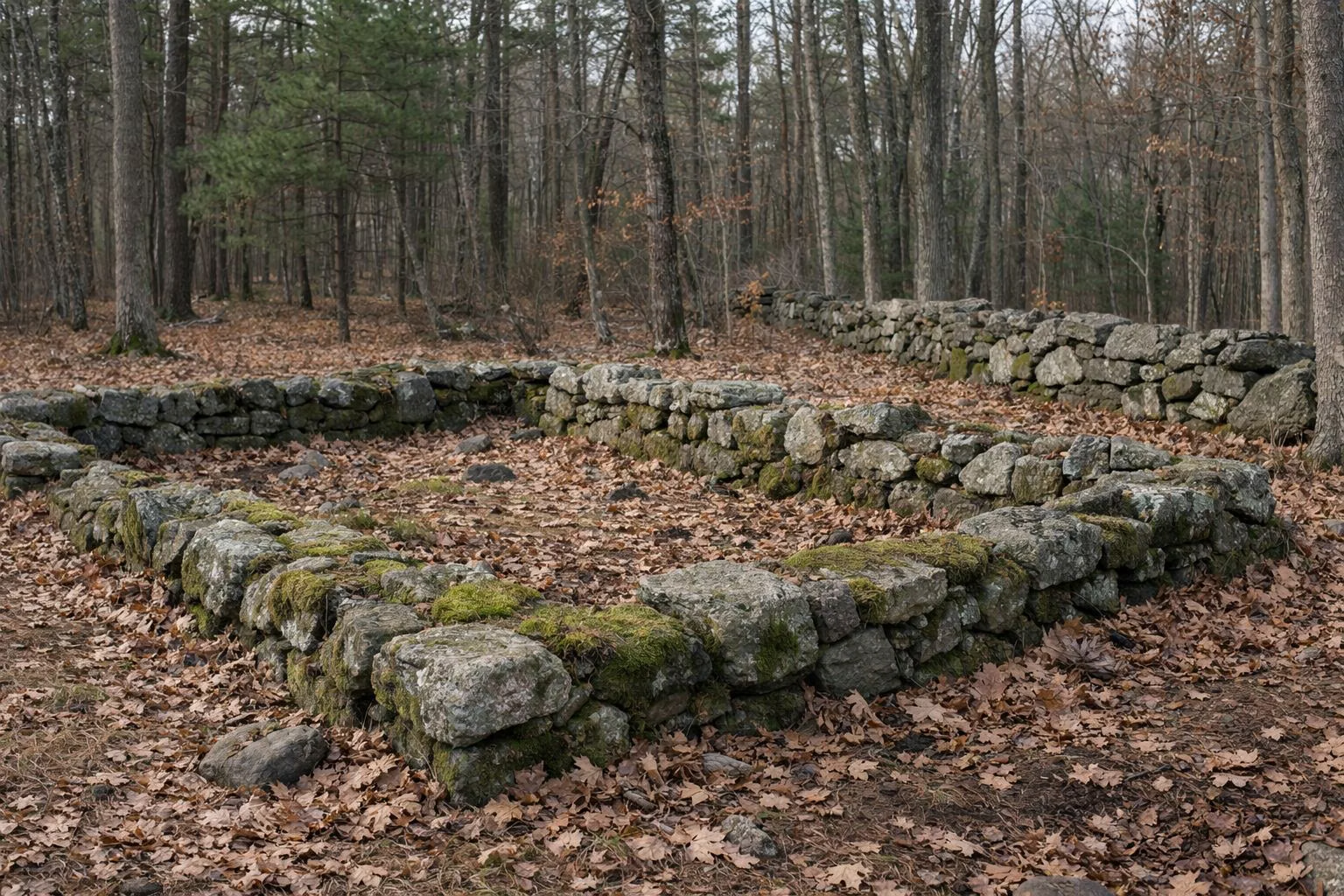
In 1706 the rugged common land west of the Saugus River, today's reservation, was divided among the settlers and named the Six Hundred Acres. For generations most of it stayed forested and was cut for firewood. At the southern entrance was an 18-acre farm first owned by the Hitchings family, later called Breakheart Hill Farm, with a farmhouse built in 1771. The ground was too rocky to plow, so the farm grazed livestock, grew hay, kept dairy cattle and an apple orchard, and put its stones into walls and foundations. The stone foundation of the old barn is still beside the boardwalk near the visitor center lot.
Mill Power on the Saugus River
When Puritan settlers moved inland from Lynn in the 1600s, they followed Native trails up the river, and some built mills: for iron, lumber, corn, cider, coffee and even chocolate. Inside the reservation, at the end of the Mill Site Trail, is a milldam built in 1814 for the Linen and Duck Manufactory Company of Boston to make sailcloth. Downstream, the river powered something far older: the 1640s iron works now preserved at Saugus Iron Works National Historic Site.
How a Hunting Retreat Saved the Forest
By the 1850s, cities nearby were crowded and polluted. Benjamin Johnson, a wealthy Lynn attorney, and his associates set out to make a private hunting retreat in the Six Hundred Acres. Beginning in 1891 they bought up the woodlots, including the farm, which they renamed Breakheart Hill Farm and bought for $1 by assuming its mortgage. A caretaker kept farming and kept trespassers out. Johnson's group created both of today's lakes by damming two spring-fed marshes, stocked them with fish and called the property Breakheart Hill Forest. They built a rustic hunting lodge on a hilltop for friends and family. Its site is stop four on Stories in Stone, at the top of the red-blazed Lodge Trail, and some remains of Breakheart Hill Camp are still there. The visitor center itself is modeled after that lodge.
1934: A State Park and the CCC
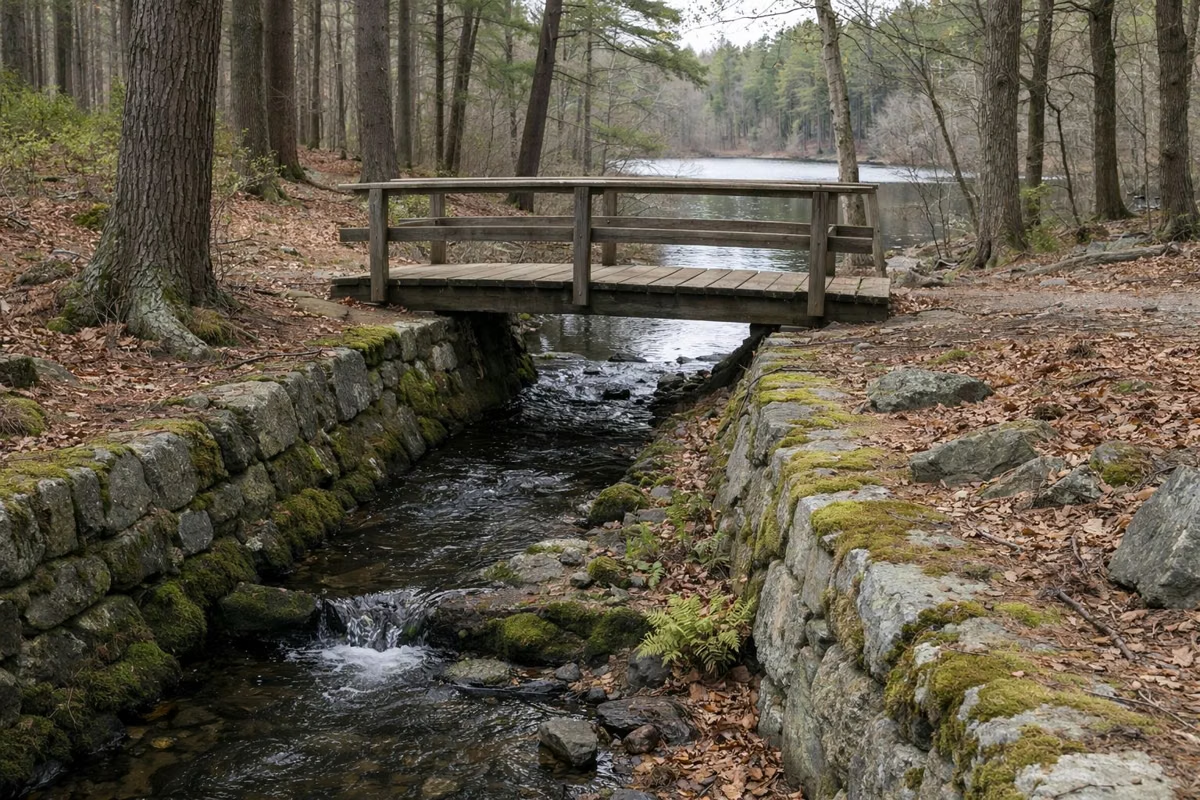
In 1934 Breakheart Hill Forest was sold for use as a state park, just as President Franklin Roosevelt's Civilian Conservation Corps began putting young men to work on public land. The farm's hay fields and orchards became CCC housing. Over six years the CCC built roads and trails, planted trees and restored the Upper and Lower Pond dams. DCR credits that work with bringing back wildlife that had become rare, including beavers, fishers, coyotes, blue herons and owls. The Flume, finished in 1937, is the CCC's best-known work here. It carries overflow from Silver Lake (the Upper Pond) to Pearce Lake (the Lower Pond) to prevent soil erosion, and it still does that job. You cross it on the Silver Lake Trail.
Breakheart Today
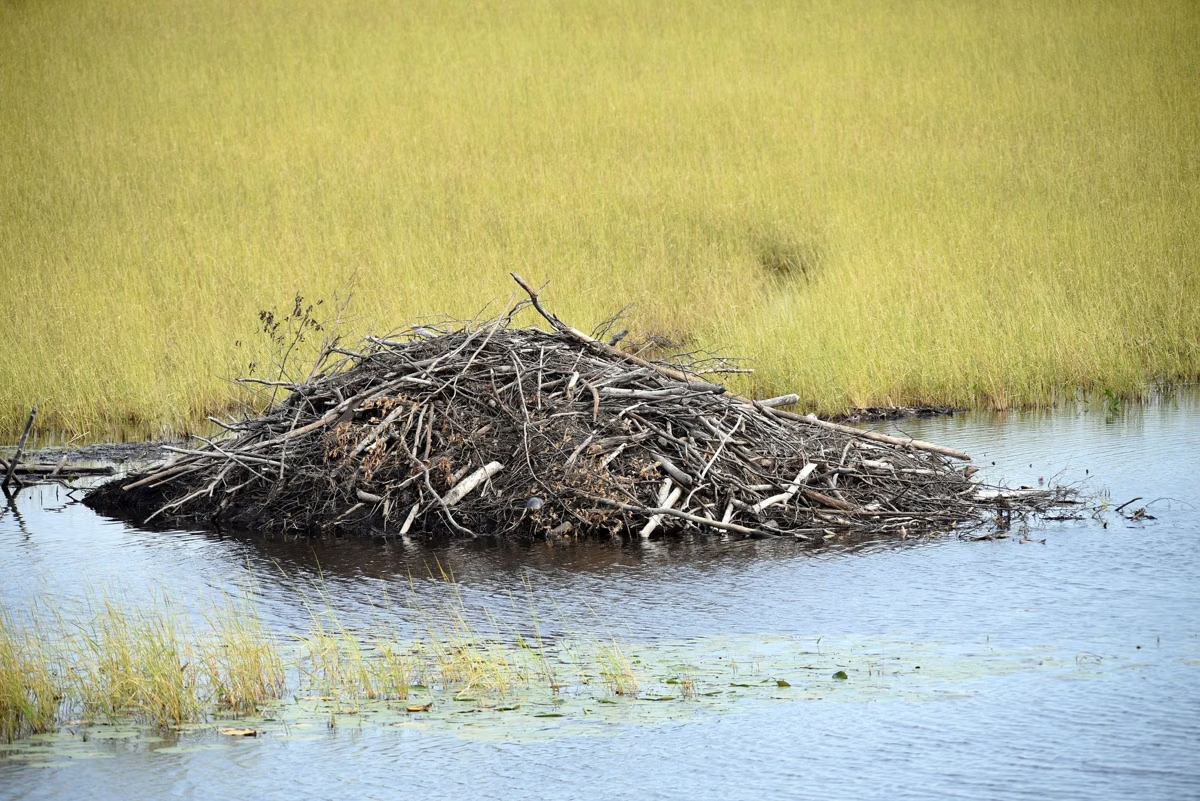
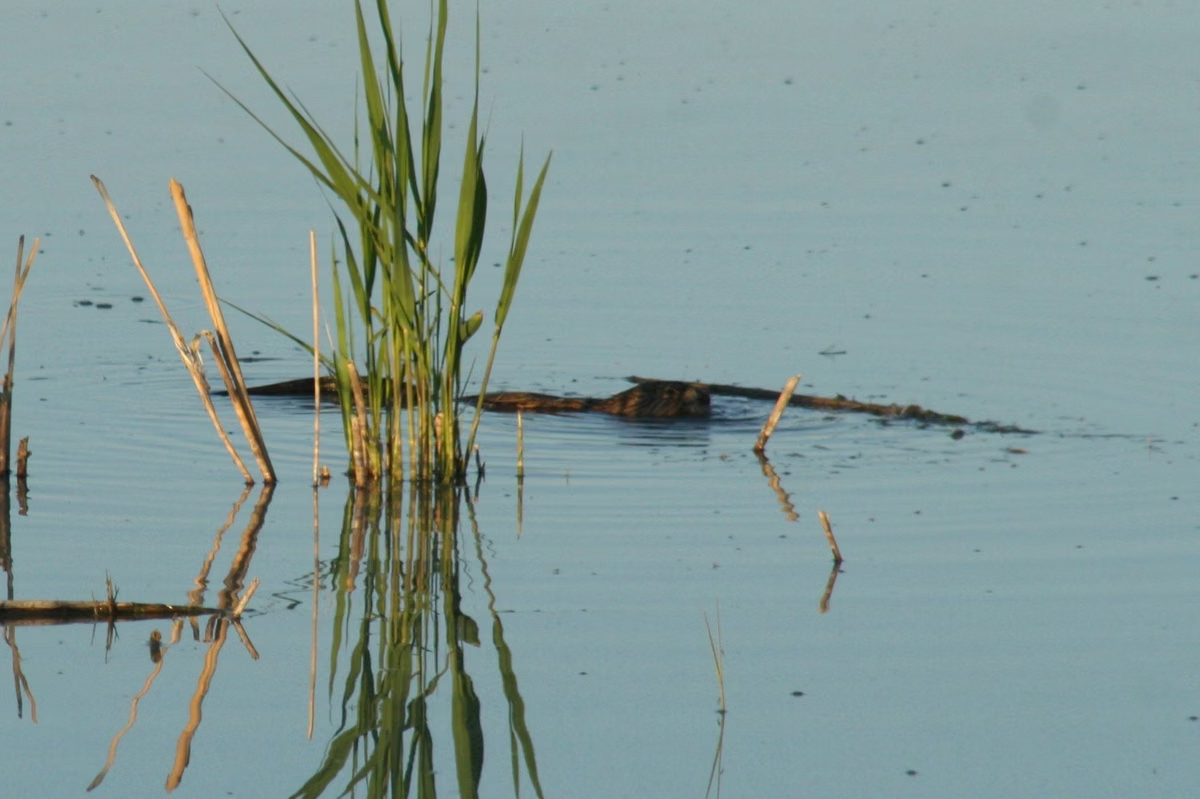
The Department of Conservation and Recreation runs the reservation and Camp Nihan Education Center next door. DCR describes Breakheart as two lakes and a large forest, with hiking, biking, horseback riding, swimming, fishing, cross-country skiing and educational programs. Parking is free. DCR's interpreters still lead the Stories in Stone walk as a guided program, and the beavers are back in the Saugus River, the subject of one of the fall 2026 programs.
Walk the History Yourself
Stories in Stone is a 3.4-mile loop from the visitor center at 177 Forest Street that takes about three hours, according to DCR. It is foot traffic only. Download DCR's guide from the self-guided opportunities page, check visitor center hours, and park at the Saugus lot.
History of Breakheart FAQ
How old is Breakheart Reservation?
Breakheart became public land in 1934, when Breakheart Hill Forest was sold for use as a state park, according to DCR. The land's recorded history goes back much further: it was divided among settlers in 1706 as the "Six Hundred Acres," and DCR dates Pawtucket stone tools found here at 8,000 to 450 years old.
Who made the lakes at Breakheart?
Benjamin Johnson, a Lynn attorney, and his associates created both lakes by damming two spring-fed marshes after they began buying the land in 1891, DCR says. The Civilian Conservation Corps later restored the Upper and Lower Pond dams in the 1930s.
What did the CCC build at Breakheart?
Over six years in the 1930s, the Civilian Conservation Corps built roads and trails, planted trees and restored the two pond dams at Breakheart, according to DCR. The Flume, the stone channel that carries Silver Lake's overflow to Pearce Lake, was finished in 1937.
Is there a history trail at Breakheart?
Yes. DCR's Stories in Stone is a 3.4-mile self-guided loop from the visitor center with five stops, each tied to stone remains: tools, walls, a milldam, a lodge site and the Flume.
How This Site Checks Facts
This is an independent visitor guide to Breakheart Reservation. It is not run by or affiliated with the Massachusetts Department of Conservation and Recreation (DCR).
Hours, fees, rules and trail figures are checked against the DCR page for Breakheart Reservation, last on October 18, 2026. Where this site and the agency differ, the agency is right.
If something here is out of date, please tell us through the contact page.